
Deckers
01
deckers
Helping a global footwear brand step into a unified retail future through employee-first SaaS products.
Agency
Beyond
Year
2021
Role
Associate Creative Director
Skills
Design leadership
Product design
Design systems

02
the challenge
Deckers was experiencing strong growth across its footwear brands, but its in-store technology needed to be built for scale.
Our challenge was to unify in-store retail operations into a confident, intuitive experience.
Deckers’ retail teams were juggling multiple systems to do their jobs, switching between third-party tools to serve customers, check inventory, process transactions and manage relationships. It slowed things down and created friction in moments that should feel seamless. Each had its own logic, patterns and limitations.
In turn, this created:
01
Cognitive overload during busy trading hours
02
Inconsistent workflows across regions
03
Longer onboarding and training time
04
Lost selling time during customer interactions
The ambition wasn’t just to redesign an interface. It was to rethink how retail operations could work as one connected, scalable experience.

03
the approach
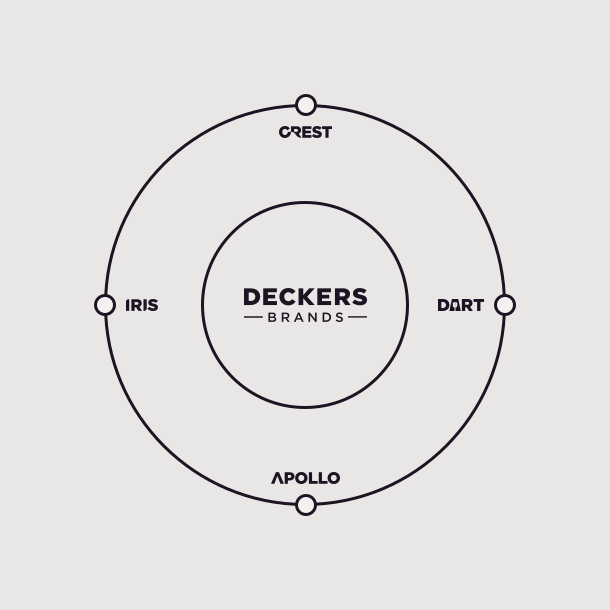
We approached the work as a long-term product ecosystem rather than a series of isolated retail tools.
This shifted our questions and decision-making away from narrow feature-level thinking toward designing a consistent, confident retail flow across the entire experience.
Our goal was to create a connected, scalable platform that could unify in-store operations across multiple products and brands. We aligned on a clear experience vision first before defining product features and diving into detail.
As Associate Creative Director, I held that vision across cross-functional teams, helping translate operational complexity into simple, usable patterns that could scale.

During our Discovery sprints, we grounded our thinking in the realities of the in-store environment. Tablets were the dominant device. Stores were often dimly lit. Associates were frequently interrupted. During peak trading, speed and clarity mattered more than feature depth.
Using these insights, we prioritised the following in our design decisions:
01
High contrast, bold typography
02
Clear hierarchy and strong visual anchors
03
Generous touch targets
04
Reduced reliance on nested menus and dropdowns
05
Fast paths through high-frequency tasks

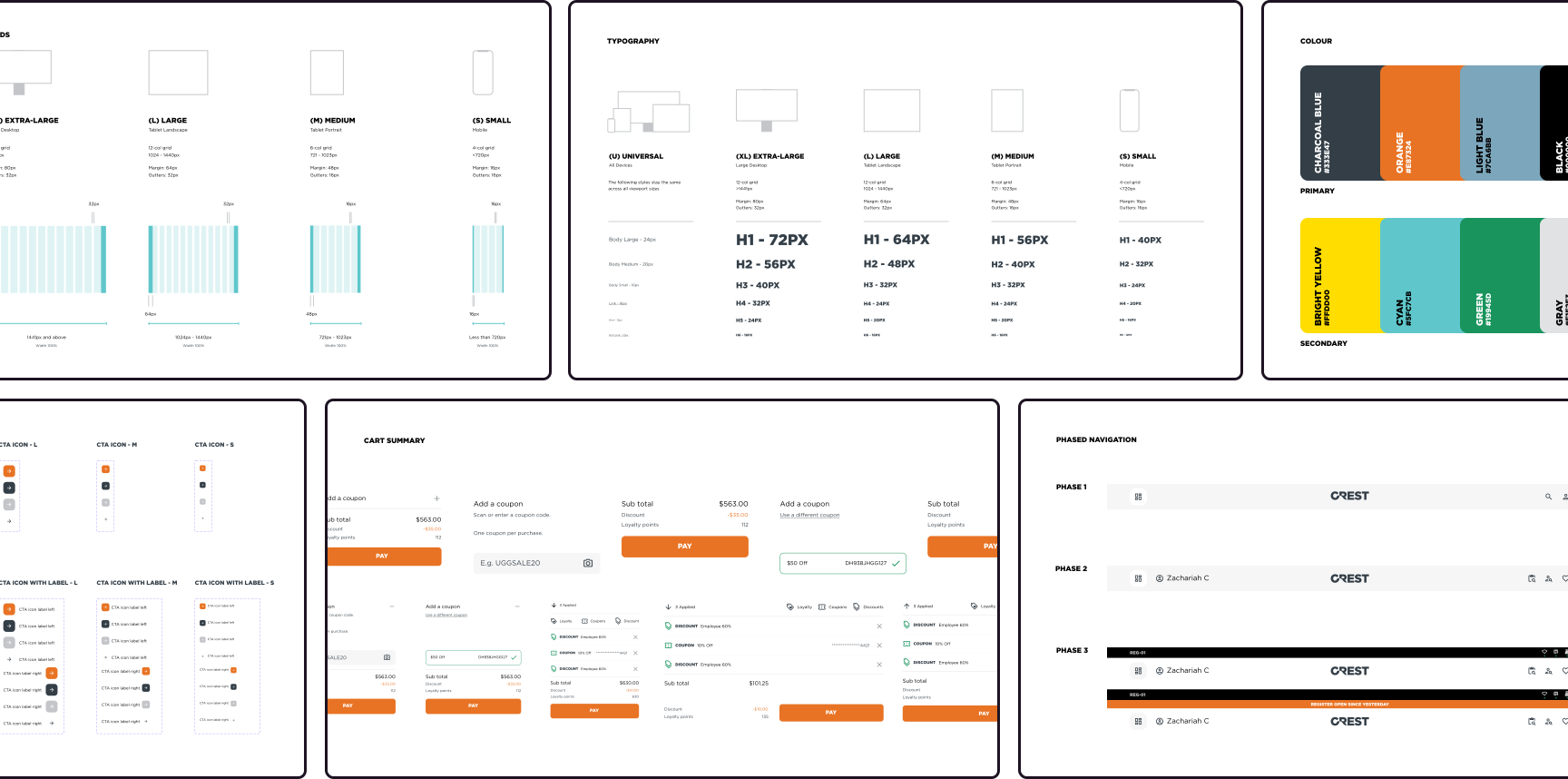
Beyond the interface, we focused on establishing shared interaction patterns and reusable components. This created a foundation for scale, bringing consistency and predictability across brands and future tools.
By treating the platform as a connected system from the start, we created a foundation that could evolve with the business rather than fragment again over time.
04
the takeaways
As a product leader, this project reinforced the responsibility of designing beyond the immediate brief. It was not just about solving today’s friction, it’s about shaping systems that hold up as organisations grow.
Three principles stayed with me:
01
Design for scale
We considered the system from day one. Rather than retrofitting structure later, we established a flexible foundation that could support multiple products across brands.
That early investment reduced duplication, accelerated delivery, and ensured consistency as the ecosystem expanded.
02
Value the invisible work
The hidden tasks matter. Time to rehearse workshops and demos. Time to align before reviews. Time to properly digest feedback rather than react to it.
Protecting that space improved decisions. Setting expectations around it built trust. This work demonstrated that strong product outcomes rarely happen by accident, they’re shaped in the preparation.
03
Remove unnecessary complexity
Scale doesn’t require heaviness.
We didn’t need an all-singing, all-dancing design system. We needed something lightweight, practical and adaptable that teams could actually use.
We prioritised clarity over ornament. Utility over excess.

05
the impact
The result was a more unified way of working in-store with one connected product experience replacing a patchwork of disconnected tools.

Unified retail experience
By consolidating fragmented tools into one connected product experience, we reduced system-switching on the shop floor and created consistent workflows across brands and regions.
Associates could move faster, onboard more easily, and serve customers with greater confidence, especially during peak trading.

Collaborative by design
We worked as a fully remote, cross-functional team, using shared tools like Miro and Figma to make progress visible and feedback continuous.
Decisions were made earlier, alignment happened faster, and the experience vision stayed intact as complexity increased.

Built to scale
We established shared interaction patterns and reusable foundations from the start, not as an afterthought.
New features and future products could be introduced without recreating fragmentation, reducing duplication and protecting long-term consistency.
Selected works


hello [at] sheetalschofield [dot] com
Let's connect.
© Sheetal Schofield 2025